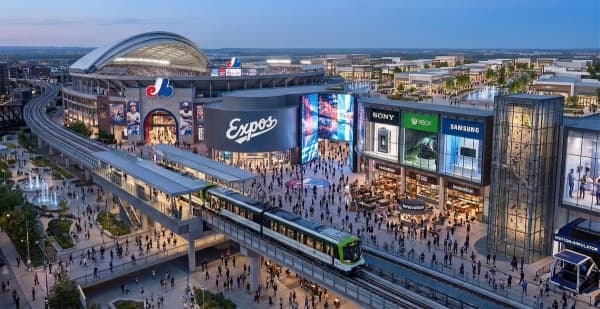
In the tribune Zone Expos
Expansion: The return of the Expos finally moves from dream to project
13 sept. 2026 · 204 vues
For more than twenty years, the return of the Expos to Montreal was mainly confined to the realm of nostalgia. Caps would come out, Gary Carter, Tim Raines and Vladimir Guerrero would be evoked, and then it would be recalled that the Olympic Stadium was no longer a credible solution. Today, the context is changing. MLB finally seems ready to seriously revive the file on expansion to 32 teams, and Montreal is once again among the cities being considered.
This does not mean the Expos will return soon. Rather, it means the city could get another opportunity to demonstrate that it deserves a team.
An expansion still in its infancy
MLB currently has 30 teams. Commissioner Rob Manfred wishes to bring this number to 32 before his term ends in January 2029. Two new franchises would also allow the leagues to reorganize divisions based on geography, with 16 teams in each league.
The official process has not yet been launched, however. The collective agreement between MLB and players must end on December 1, 2026, and the rules for any expansion will need to be discussed as part of the next agreement. According to scenarios currently being discussed, the new teams would not start playing before 2032 or 2033.
Montreal is therefore not a few months away from opening day. The city is rather at the beginning of a competition that could stretch for several years.
Montreal has the best story
Among candidate cities, Montreal is the only one to have already hosted an MLB team. The Expos played in Quebec from 1969 to 2004 before relocating to Washington to become the Nationals.
This history is a considerable advantage. The return of the Expos would immediately offer MLB a powerful narrative: an abandoned franchise reunited with its fans, a renewed rivalry with Toronto, and a new team that could draw on several generations of memories.
Montreal also has a significant metropolitan market, a strong sports identity and an interesting geographic position in eastern North America. A Quebec team would allow MLB to strengthen its presence in Canada and tap into a unique francophone market.
But history won't pay the bills. It won't build a stadium and won't guarantee that fans will fill the stands during a difficult season.
The stadium remains the central issue
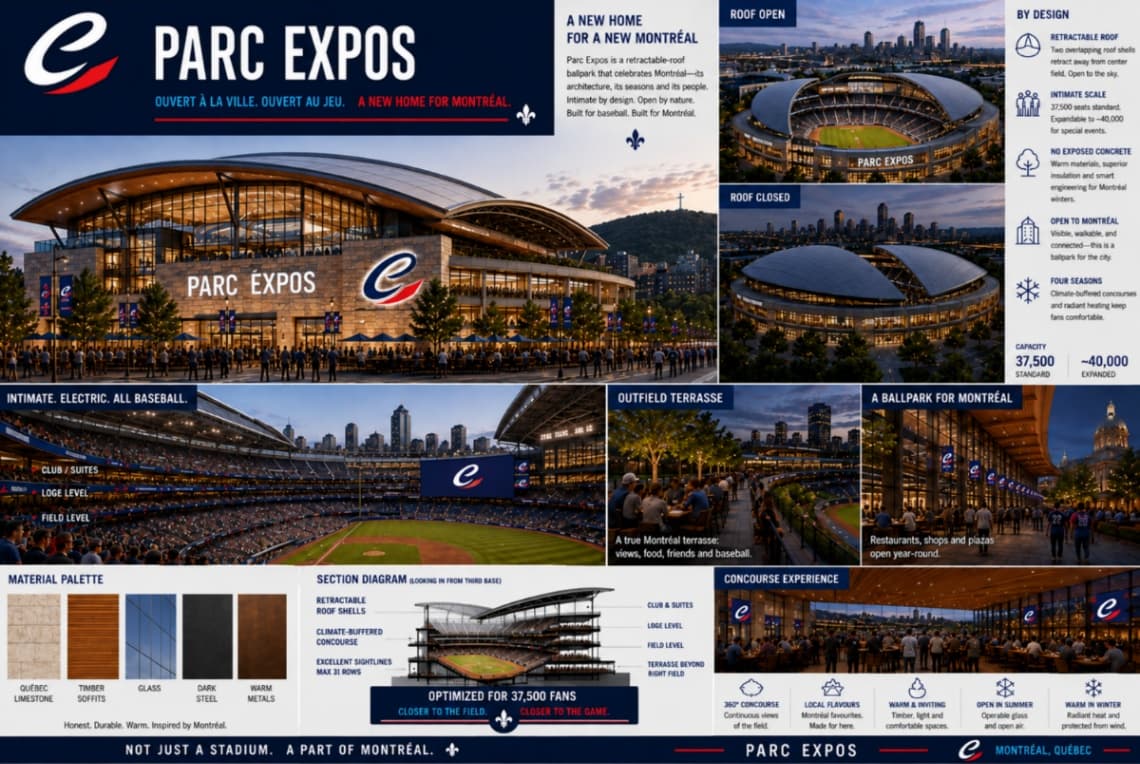
Montreal's main problem is well known: there is still no modern baseball stadium.
The Olympic Stadium can host games and remains associated with great memories, but it does not represent a permanent solution. Its age, maintenance costs, fan experience and commercial limitations work against it.
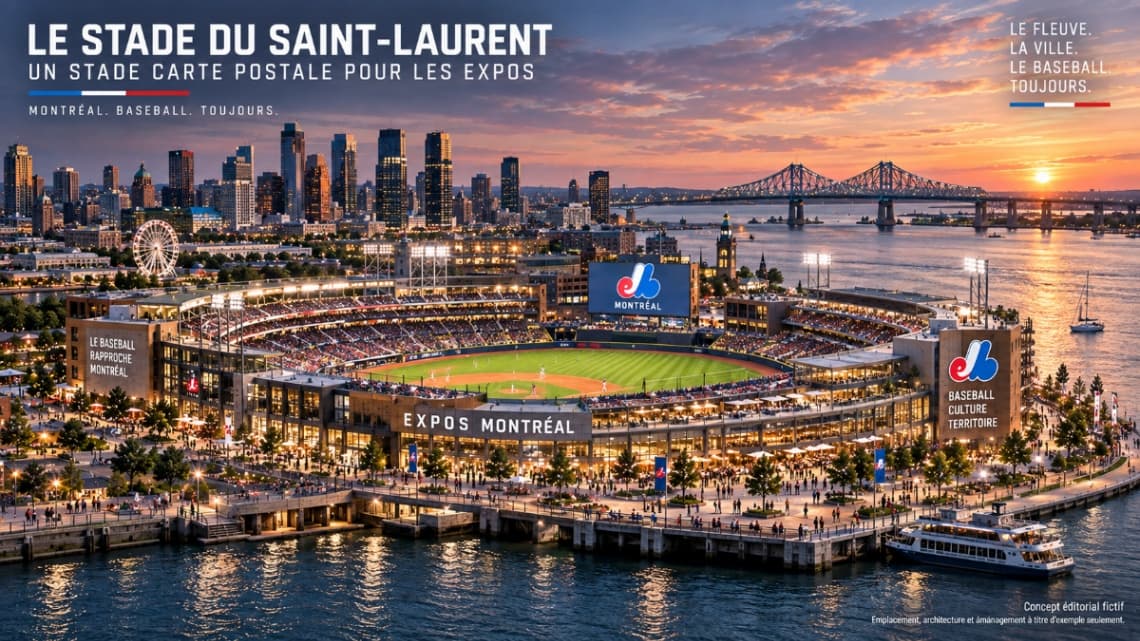
To be credible, Montreal will need to present a precise project, with an identified site, solid financing and a realistic timeline. The Peel Basin has already been associated with previous efforts to bring the Expos back, but no final proposal appears to be ready to submit to major baseball leadership.
This is where some American cities could gain an advantage. Nashville, Raleigh, Portland, Orlando and Salt Lake City are also mentioned among potential markets. Several could offer MLB a simpler candidacy from a political standpoint, especially if they already have land or a stadium plan in place.
A price tag that will change the debate
The cost of an expansion franchise could reach approximately 2.5 billion U.S. dollars, not including stadium construction and surrounding infrastructure.
Montreal will therefore need to bring together an extremely powerful group of owners. This group will need to finance the purchase of the franchise, the stadium, the training facility, baseball operations and possible losses in the early seasons.
Public financing will inevitably be at the heart of the discussion. Quebec and Montreal governments will want to know the economic benefits before participating in such a project. Taxpayers, meanwhile, will ask why they should contribute to creating an asset owned by private investors.
The answer cannot rest solely on nostalgia. There will need to be guarantees, numbers and a transparent business model.
Montreal is in the race, not in the lead
The greatest danger would be to confuse media interest with an official candidacy. MLB has not yet announced a formal expansion process, and no decision has been made.
Montreal has the best story, but its rivals could present better real estate and financial packages. To win, the metropolis will need to demonstrate that it has learned from the past: a permanent team, stable ownership, serious investment in player development and a strategy capable of attracting a new generation.
The return of the Expos is therefore possible again. Not certain, not imminent, but possible. This time, Montreal will need to do more than remind people why it loves baseball. It will need to prove it is ready to build an organization capable of surviving the tough times.
The dream is back. Now it needs a stadium, investors and a real plan.