In the tribune Zone Expos
Is the CFL in Quebec stealing the show from the Expos?
25 sept. 2026
A few weeks ago, if someone had asked what the next major professional sports project was likely to make Quebec dream, the answer would probably have been obvious.
The Expos.
Still the Expos.
Always the Expos.
Then, almost without warning, Quebec arrived with its Canadian Football League project.
And in a matter of days, the media landscape completely shifted.
A promoter identified.
Discussions with the league.
A meeting with the commissioner.
A vote by governors.
A franchise fee of $25 million.
A potential stadium of 25,000 seats.
A location.
A temporary solution at TELUS Stadium.
An arrival window around 2030-2031.
The possibility of eventually hosting the Grey Cup.
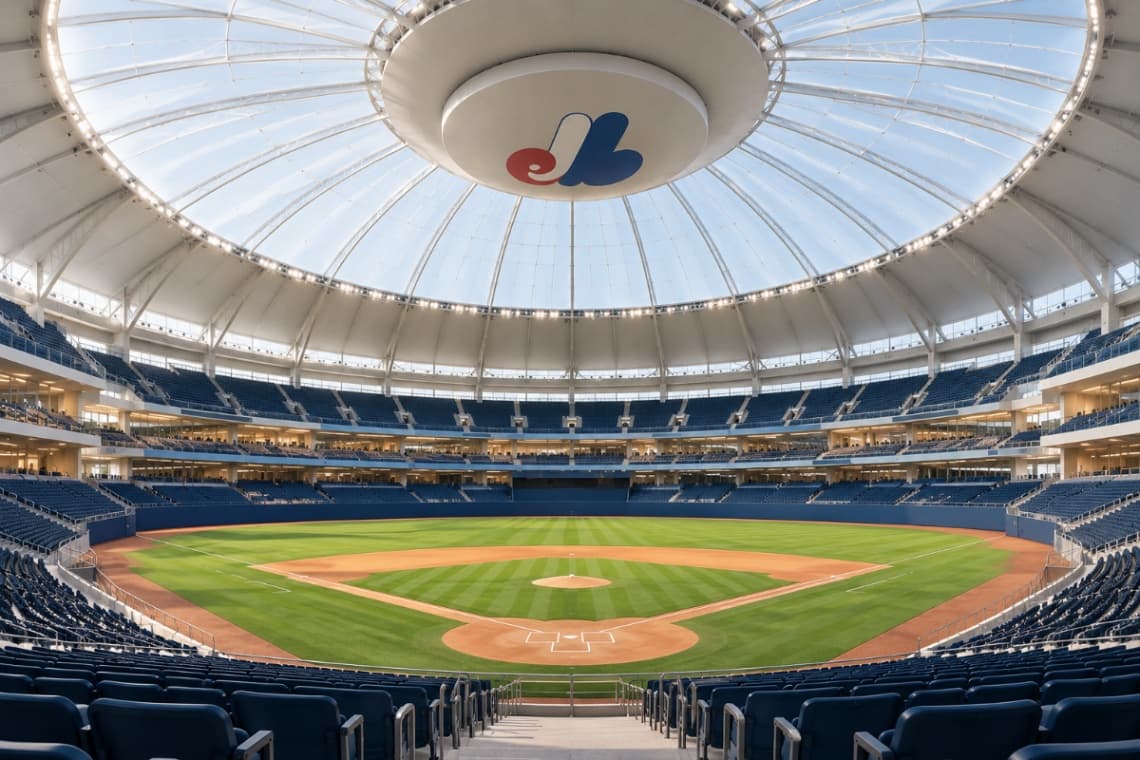
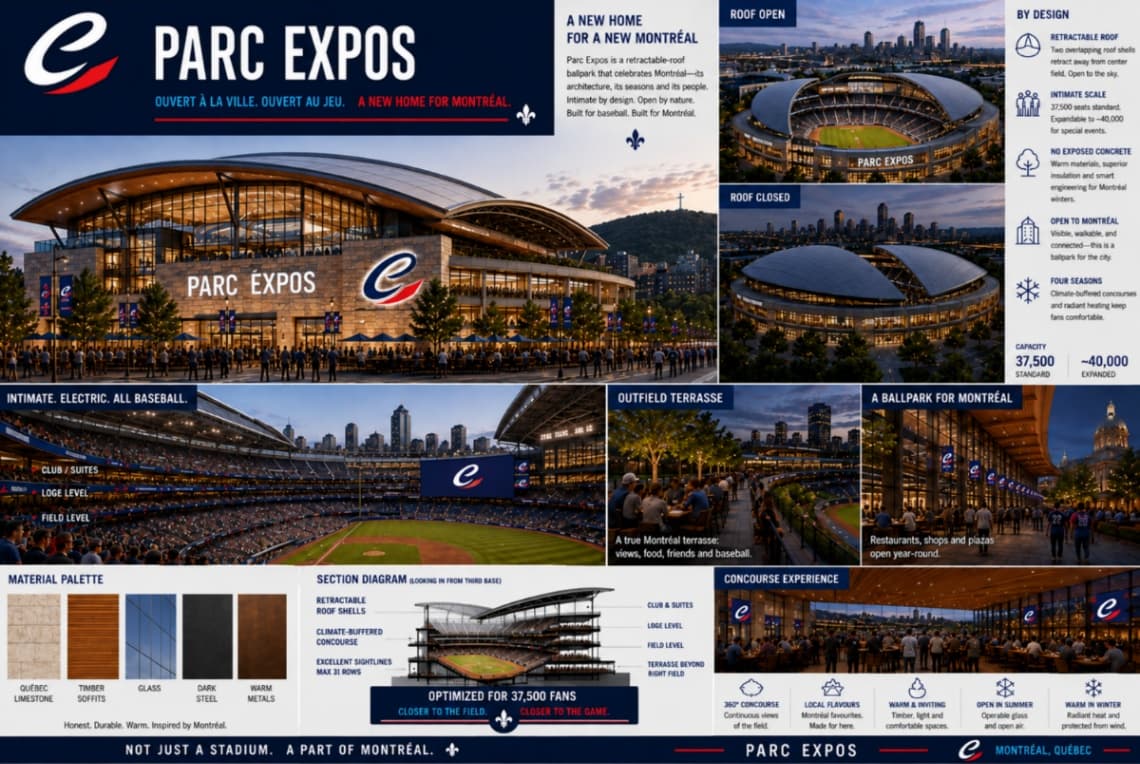
Meanwhile, in Montreal, people are still talking about convincing MLB that it should return.
It's a brutal comparison.
And even for someone who desperately wants to see the Expos again, you have to acknowledge one thing:
right now, the CFL project in Quebec is stealing the show.
The return of the Expos has nonetheless come back to life
What makes the situation even more surprising is that the Montreal project is absolutely not dead.
Quite the opposite.
It too has just experienced a significant resurgence of activity.
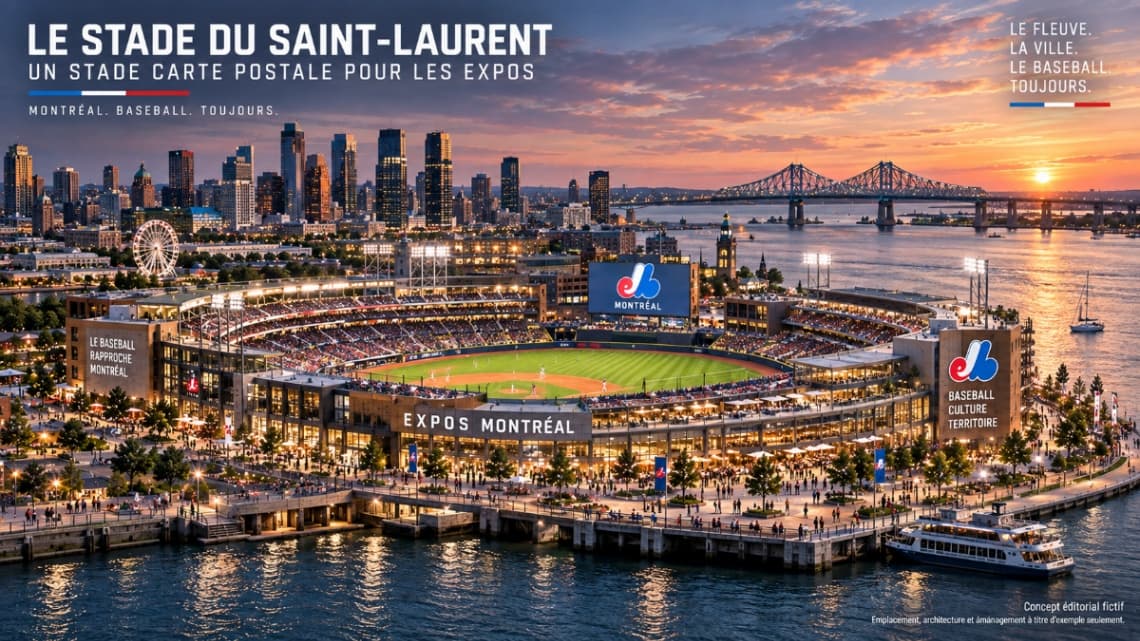
Montreal entrepreneur Ashkan Karbasfrooshan, founder of WatchMojo, is publicly building what he calls the Peanut Project, whose goal is to bring major league baseball back to Montreal and restore the Expos.
And he's no longer just floating the idea on social media.
The Los Angeles Times reported this week that former Dodgers General Manager Dan Evans is already associated with the project and would be Karbasfrooshan's choice to eventually run baseball operations for a Montreal franchise. Karbasfrooshan also claims to have discussed with people from the NFL and MLB for other important positions.
He continues to work publicly on the project this week, notably on the question of a future stadium and its financing. He himself acknowledges that Montreal currently has no franchise, no stadium, no reserved land, and that MLB hasn't even officially launched its expansion process yet.
That's exactly the problem.
The Expos have become a project.
The CFL in Quebec is starting to look like a transaction.
In Quebec, someone already seems to want to buy the team
That's probably the fundamental difference between the two files.
William Trudel is not simply a football fan trying to convince the CFL that Quebec would be a good market.
According to information circulating over the past few days, his group is negotiating directly with the league.
Commissioner Stewart Johnston publicly acknowledges having had productive discussions with a local group he describes as serious and committed. The CFL now considers Quebec as one of the main candidates for its expansion.
And according to information reported by Dave Naylor of TSN, the project would have received unanimous conditional approval from the board of governors and an agreement would provide for payment of a franchise fee of $25 million to the CFL.
Reread that sentence.
$25 million.
A promoter.
A league.
A price.
Conditional approval.
We're no longer quite in the same universe as: « Montreal would be an excellent market if MLB decided to open its expansion process one day. »
It absolutely doesn't guarantee that Quebec will have its team.
But we suddenly understand why the file has exploded in the news.
The Expos problem has become gigantic
There's especially a financial reality that gets less attention when nostalgia takes over.
Bringing back the Expos in 2026 has nothing to do with bringing back the Expos ten years ago.
The potential entry price has become completely outrageous.
The Los Angeles Times reminds us that the current average value of an MLB franchise is around $4 billion US, and that some observers expect expansion rights could eventually reach or exceed that level.
Then add a stadium.
The land.
The infrastructure.
The financing.
The operations.
We're no longer talking about a project of a few hundred million.
We're talking potentially about an adventure of several billion.
Karbasfrooshan knows this perfectly. He publicly acknowledged that he doesn't personally possess the necessary capital and that he will have to bring together much larger investors to make his project credible.
In Quebec?
The figure reported to enter the CFL is $25 million.
Of course, it would be ridiculous to compare only the two franchise fees. The revenues, values and international reach of MLB and CFL are not comparable.
But for project feasibility, the difference is immense.
The CFL also possesses something that Montreal is still waiting for
It actually wants to add a team.
That sounds trivial.
It's not.
The CFL has been operating with nine franchises since Ottawa's return in 2014. A tenth team would notably help balance the league.
And the CFL has itself qualified Quebec as a leading candidate, citing football fans, corporate support, economic and demographic growth, as well as the possibility of creating a natural rivalry with Montreal.
MLB, for its part, still hasn't launched its expansion process.
Rob Manfred wants to settle the expansion before his planned departure in January 2029, and Montreal is among several markets regularly mentioned, along with Nashville, Salt Lake City, Raleigh, Orlando and Portland.
That's a huge difference.
Quebec seems to be negotiating directly with a league that's looking for a tenth team.
Montreal is trying to position itself to participate in a competition that hasn't officially started yet.
But beware: Quebec also has its own huge problem
Everything isn't settled.
Far from it.
The $25 million franchise fee probably isn't even the toughest piece.
The stadium is.
The currently reported project calls for a venue of approximately 25,000 seats on the site of the former Coliseum, with an estimated cost so far around $350 million. Other media discussions have since mentioned a potential bill that could be higher.
Financing isn't settled.
And as long as it isn't, nobody should write that Quebec has its franchise.
That's exactly what explains the « conditional » approval reported by Naylor. According to him, stadium financing remains the determining piece of the file.
So yes, Quebec is much further ahead than anyone could have imagined a few weeks ago.
But it could still hit a wall.
Literally a $350 million wall.
What hurts the Expos is mainly the contrast
Because we know this story.
For years, the return of the Expos has worked in waves.
A group appears.
A stadium scenario appears.
Land appears.
An MLB statement renews hope.
Then we wait.
The Bronfman project long carried that hope. There was the Peel Basin. Then came that strange story of shared custody with the Tampa Bay Rays.
Then everything collapsed.
Today, Karbasfrooshan is trying to rebuild something new.
And I find his approach fascinating.
But for the public, there's an enormous difference between building a candidacy and negotiating a franchise.
That's exactly what Quebec just managed to do in the media.
And there's something a little ironic about it
For years, Quebec watched Montreal with envy.
Montreal had the Canadiens.
The Alouettes.
CF Montreal.
And it dreamed of finding the Expos again.
Quebec had the Rouge et Or, the Remparts and its Videotron Centre waiting for the hypothetical return of the Nordiques.
And suddenly, the professional project that seems to be moving the fastest in Quebec is neither the Nordiques nor the Expos.
It's a Canadian football team whose potential owner no one knew about just a few days ago.
You have to admit, it's quite spectacular.
But the Expos have something the CFL in Quebec will probably never have
Scale.
If the Expos ever return, the event would be of an entirely different dimension.
We'd be talking about the return of a historic franchise after more than twenty years of absence.
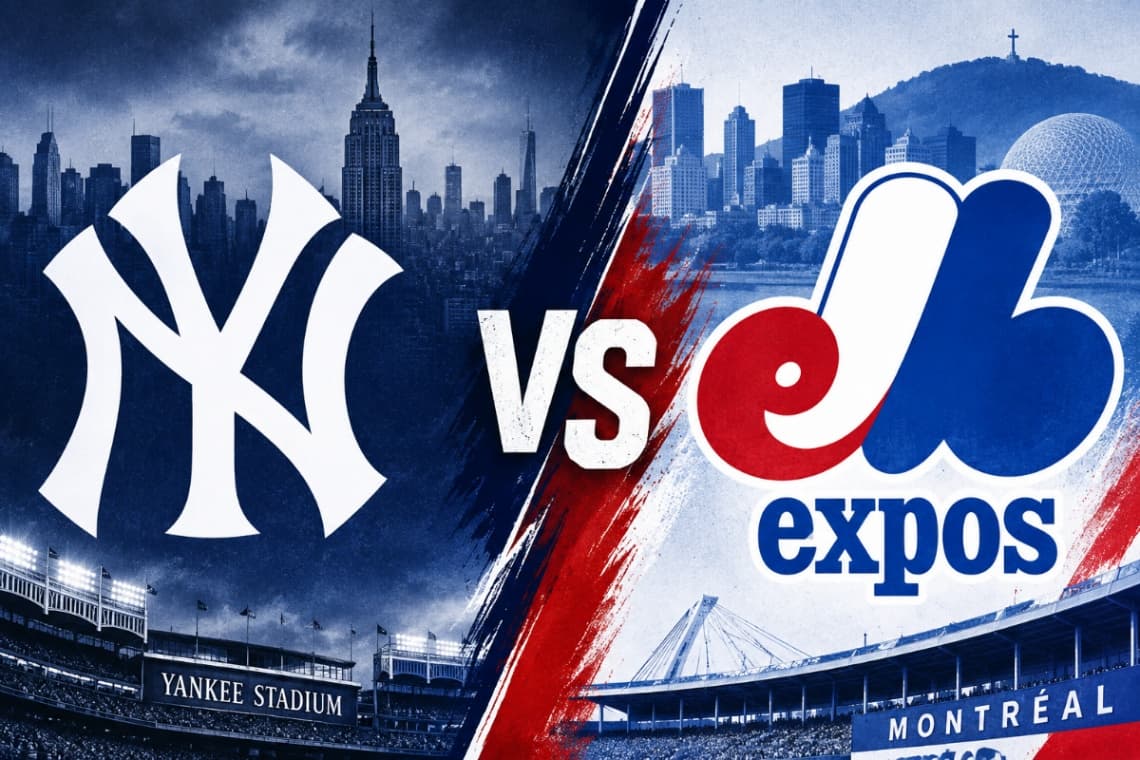
The Yankees.
The Red Sox.
The Dodgers.
The Blue Jays.
Major league baseball in Montreal for 81 home games a season.
An MLB franchise would also represent an asset worth several billion dollars and would place Montreal back in one of the four major North American professional leagues.
A CFL team in Quebec could become an enormous popular success.
But they're simply not projects of the same economic scale.
And that's exactly what makes the current situation so interesting.
The least spectacular project on paper is currently the most concrete.
So, is the CFL really eclipsing the Expos?
In the media?
Right now, yes. Without a doubt.
In a matter of days, Quebec went from an expansion rumor to a file where we now know the presumed promoter, the franchise fee amount, the stadium scenario, the proposed site, the possible temporary home and the approximate period of entry into the league.
Montreal has again a determined entrepreneur, an extraordinary story, the largest market among several potential candidates and even baseball leaders interested in participating in the project.
But it still lacks the two elements that would completely change the conversation:
a financial group capable of absorbing a multi-billion dollar transaction and genuine openness from MLB.
Quebec seems to have already found its William Trudel.
Montreal is still searching for the financial group capable of turning the Peanut Project into an unstoppable candidacy.
And that's maybe, after all, the best way to sum up the situation.
While Montreal is still trying to show MLB why it should get the Expos back, Quebec is already at the point of trying to figure out how to build the stadium for its future team.
The Expos remain the much bigger dream.
But for a rare change, it's no longer necessarily the Quebec sports dream that seems closest to becoming reality.